
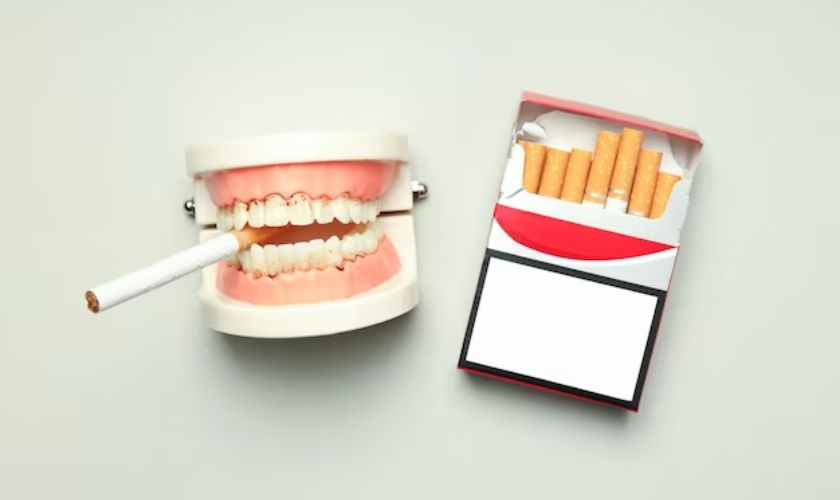
Thinking about getting dental implants to replace your missing teeth? It is a fantastic choice for a long-lasting, natural-looking smile. But if you are a smoker, you might be wondering: “can I still smoke after dental implants?” There are some important post-operative steps that you need to remember to ensure your dental implants are set and healed properly and last for a long-time or lifetime. One crucial factor for successful dental implant integration is smoking.
It is often discussed that sudden quitting smoking can be challenging, so it's important to be aware of how smoking can negatively impact your dental implants including zirconia implants, bridges, single tooth implants and so on.
In this blog, we will understand the connection between smoking and dental implants, exploring the risks and offering helpful tips for a smooth recovery.
Smoking poses several significant threats to the success of your dental implants. Here's a breakdown of the key concerns:
Nicotine, the main addictive ingredient in cigarettes, acts as a vasoconstrictor. This means it narrows your blood vessels, restricting the blood flow to the gums and jawbone. This hindrance of blood flow significantly impacts healing of the gums after the completion of the surgery.
Without adequate blood flow, your body struggles to deliver the essential nutrients and oxygen needed for the implant site to heal properly. This can lead to delay in healing, increase the risk of infections, and even cause implant failure.
Frequent smoking weakens your immunity system, making you more vulnerable to infections in general. This increased vulnerability is particularly concerning after dental implant surgery, as the surgical site is open and susceptible to bacteria.
Furthermore, the heat from smoking can damage your gum tissues, further increasing the risk of infection and inflammation around the implant area.
One of the biggest concerns for smokers with dental implants is bone loss. Smoking disrupts the natural bone-building process and weakens the jawbone, which is crucial for supporting the implant. This can lead to peri-implantitis, a condition where the bone around the implant deteriorates, ultimately leading to implant failure.
Ideally, quitting smoking altogether is the best course of action for optimal dental implant success and overall health. However, we understand that quitting can be a long term process and needs attention.
If quitting completely is not feasible right away, it's absolutely possible to avoid smoking for at least 2-3 months after your implant surgery. This timeframe allows for critical healing and osseointegration, the process where the implant fuses with the jawbone.
Even after the initial healing period, smoking continues to pose a threat to your dental implants. It's highly recommended to minimize or ideally, eliminate smoking altogether for long-term implant success and overall oral health.
Here are some helpful tips to maximise the success of your dental implants and ensure a smooth recovery:
While smoking after dental implant surgery might seem like a small indulgence, the potential consequences can be significant and long-lasting. By understanding the risks and taking necessary steps, you can significantly increase the success rate of your dental implants and enjoy a healthy, beautiful smile for years to come.
Remember, your dentist is your best resource for guidance and support throughout the implant process. Don't hesitate to reach out to them with any questions or concerns you may have.


Copyright © 2026 Whole Health Dentistry • Desert Ridge Medical Plaza 20950 North Tatum Blvd, Suite 300 Phoenix, AZ 85050 • Phone: 480.563.4141