
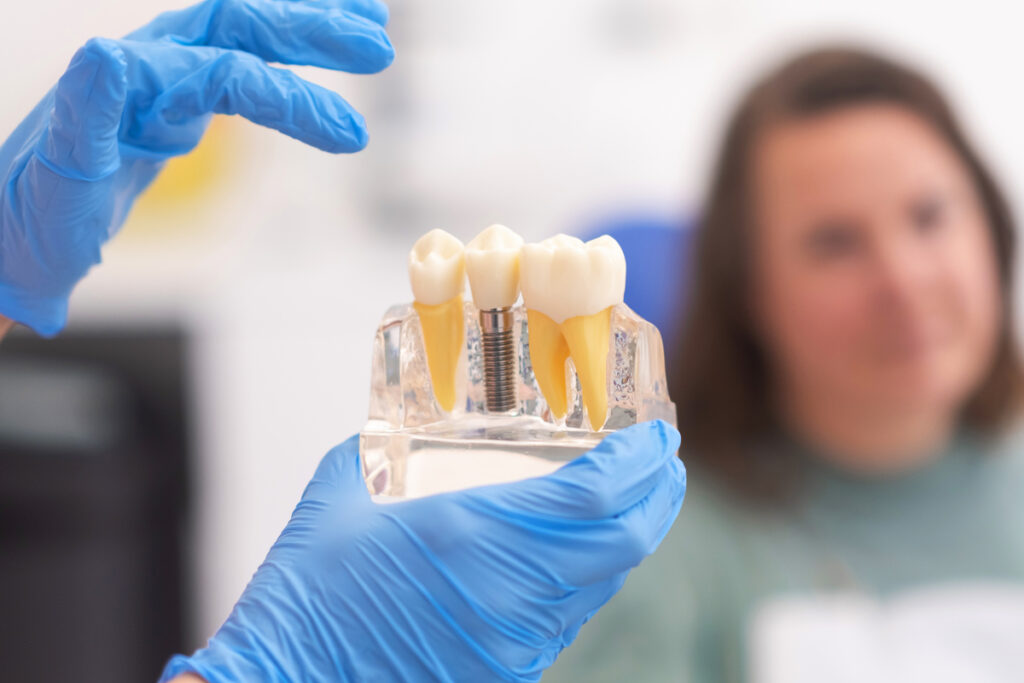
Have you ever found yourself staring at a gap in your smile and wondering if there’s a way to hit the "undo" button? You aren’t alone. In fact, roughly 150 million people in the United States are currently missing at least one tooth. When it comes to permanent solutions, dental implants are the undisputed heavyweight champion. But here is where the plot thickens: do you go with the "tried-and-true" metal titanium, or the "new-school" ceramic zirconia?
It’s not just about which one looks prettier in a selfie; it’s about what is actually better for your long-term health, your jawbone, and your peace of mind. Are you curious if a metal-free approach is just a trend or a biological breakthrough? Let's dive into the data and settle the debate between ceramic and titanium once and for all.
Dental implants have evolved from a luxury service to a standard of care. As of 2026, the global dental implant market has reached an estimated at $8 billion, with North America holding a dominant 37.4% share. While titanium remains the industry leader, ceramic (specifically zirconia) is rapidly gaining ground among patients seeking holistic and aesthetic alternatives.
Titanium implants have been used for over 50 years and remain the most commonly placed implants worldwide.
1. Proven Long-Term Success
2. Superior Strength and Durability
3. Excellent Osseointegration
4. Widely Available and Cost-Effective
Ceramic implants are typically made from zirconium dioxide (zirconia), a strong, biocompatible material.
1. Metal-Free and Hypoallergenic
2. Superior Aesthetics
3. Reduced Plaque Attraction
1. Slightly Lower Success Rates
2. Less Long-Term Data
3. More Brittle Material
4. Higher Cost
Scientific evidence consistently shows that titanium implants still lead in long-term performance:
That said, newer zirconia designs are improving rapidly, and some short-term studies show comparable outcomes in specific cases.
The answer isn’t one-size-fits-all—it depends on your individual needs.
Choosing between ceramic and titanium isn't a "one-size-fits-all" decision. Titanium offers 50+ years of clinical data and unmatched structural integrity, making it the reliable choice for most patients. However, ceramic (zirconia) is the clear winner for those prioritizing aesthetics, holistic biocompatibility, and a metal-free lifestyle.
Ultimately, the best implant is the one that integrates seamlessly with your jawbone and allows you to eat, speak, and smile without a second thought. Consult with a local qualified dentist in Phoenix to determine which material best aligns with your health goals.
1. Are ceramic implants safer than titanium?
Both are considered safe. Ceramic implants are metal-free and may be preferable for patients with sensitivities, but titanium has a longer safety record.
2. Do ceramic implants last as long as titanium?
Not yet proven. Titanium implants have documented success over 20–30 years, while ceramic implants still lack extensive long-term data.
3. Can titanium implants cause health problems?
In rare cases, some patients may experience sensitivity, but overall, titanium is highly biocompatible and widely used in medical implants.
4. Which implant looks more natural?
Ceramic implants are tooth-colored and provide superior aesthetics, especially in visible areas.
5. How do I choose the right implant?
Your choice should depend on your oral health, budget, aesthetic goals, and whether you prefer a metal-free option. A qualified implant dentist can guide you.


Copyright © 2026 Whole Health Dentistry • Desert Ridge Medical Plaza 20950 North Tatum Blvd, Suite 300 Phoenix, AZ 85050 • Phone: 480.563.4141