
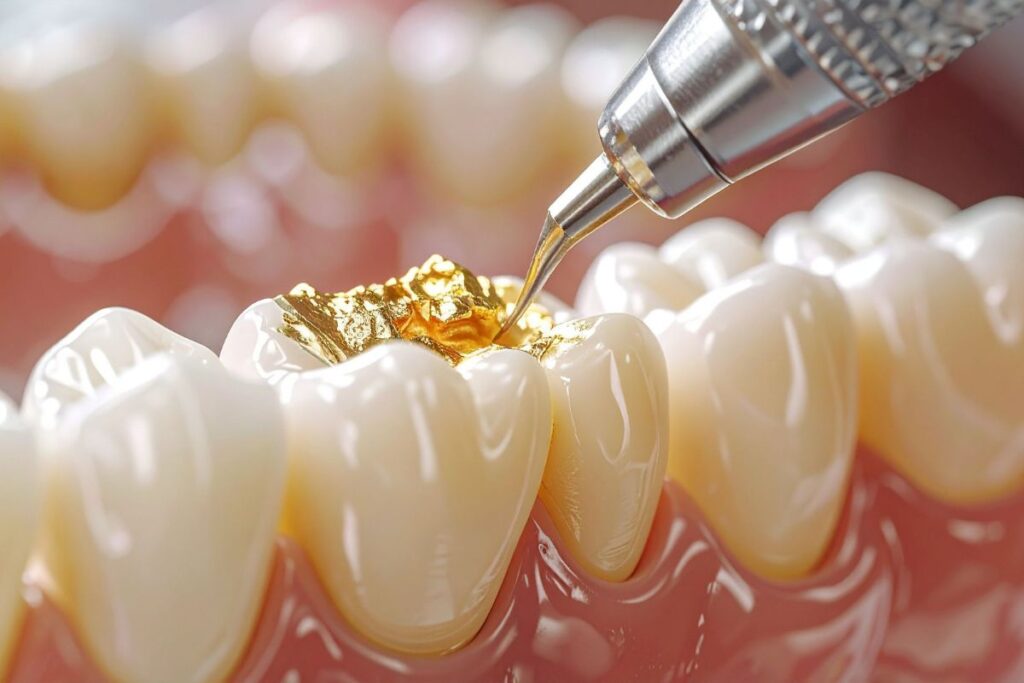
If you are one of the millions of Americans with silver-colored fillings, that crunch is a scenario you might know all too well. For decades, metal amalgam was the gold standard (ironically) for fixing cavities. It was strong, cheap, and got the job done. But if you have fillings that date back to the Bush administration—or earlier—you might be walking around with a tiny structural hazard in your mouth.
Why do these "durable" fillings fail? And when they finally give up the ghost, what are your options in 2025? Let’s dive into the data, the science, and the fixes.
Amalgam is a durable alloy (silver, tin, copper, and a small amount of elemental mercury) that’s been used for over a century to restore back teeth because it’s strong, inexpensive, and long-lasting. The American Dental Association still recognizes amalgam as a safe and effective restorative material for many situations.
The headline: it varies a lot. Across the literature, you’ll see ranges and medians rather than a single number:
So if your filling is over a decade old, keep an eye on it — it’s in the range where problems become much more common.
Large amalgam restorations (especially multi-surface/back teeth) concentrate chewing forces and can develop cracks in the metal or in the surrounding tooth structure. Recent reviews find that fractures are a primary reason for replacing amalgams (particularly in extensive restorations). Patient behaviors like bruxism (teeth grinding) substantially increase the risk.
Many studies list secondary caries as a leading reason to replace restorations. For amalgam specifically, secondary decay is a leading cause in multiple clinical series and remains a common failure reason. (Which is part of why dentists evaluate both the filling and the surrounding tooth.)
Over the years, the interface between tooth and filling can wear, corrode slightly, or gap, allowing bacteria to infiltrate. That marginal breakdown shows up as staining, sensitivity, or recurrent decay. Several retrospective studies link margin deterioration to later failure.
Even though amalgam is tough, repeated chewing cycles and chemical exposure (saliva, acids) cause microscopic metal fatigue or corrosion products that weaken the restoration over decades. Older, larger amalgams are particularly prone to this.
Because amalgam doesn’t bond to tooth structure the same way bonded composites do, a weakened cusp can fracture in a tooth with a large amalgam; sometimes the tooth needs a crown instead of a simple replacement. Clinical data show that tooth fractures and restoration fractures are common reasons for re-treatment of restored teeth.
When you show up with a problem tooth, the dentist will typically:
If amalgam is removed, dentists generally follow protocols to minimize mercury vapor exposure (high-volume suction, rubber dam, water cooling). The ADA states that amalgam is a safe, effective option and that removal should be clinically justified (not done solely because the filling contains mercury). If replacement is necessary for health or cosmetic reasons, discuss safe removal practices with your dentist.
Amalgam fillings are durable but not immortal. The most common reasons they fail are fracture, secondary caries, and marginal breakdown, with extensive restorations and bruxism increasing the risk. Lifespans vary — many survive a decade or more, while others fail sooner — so regular dental checkups and addressing risk factors (like grinding or poor oral hygiene) are the best defenses. When a filling does fail, there are predictable, evidence-based options: repair, replace, or restore with an onlay/crown, depending on tooth health. Talk with your qualified dentist in Phoenix about the pros and cons of each choice for your tooth, and if you’re worried about amalgam removal, ask about safe removal protocols.
Q1: My old silver filling is 12 years old — should I replace it now?
A: Not automatically. Age alone isn’t the only factor — symptoms, bite, visible damage, and X-ray evidence of decay determine the need. Many amalgams last 10–15+ years; have your dentist evaluate it.
Q2: Is it safe to remove amalgam fillings because of mercury?
A: The ADA and other authorities say amalgam is a safe, effective material. If removal is necessary for medical or aesthetic reasons, dentists use precautions (such as a rubber dam and high-volume suction) to limit exposure during the procedure. Routine removal solely due to mercury concerns is not generally recommended.
Q3: Can a cracked amalgam be repaired instead of fully replaced?
A: Yes — small chips or marginal defects can sometimes be repaired with bonded materials. But if there’s recurrent decay or a major fracture, full replacement or a crown may be the better long-term solution.
Q4: Which lasts longer — amalgam or composite?
A: Historically, many studies show amalgam has equal or better longevity in posterior load-bearing teeth, especially for extensive restorations. Recent meta-analyses report varying results depending on study methods, but fracture is the main reason amalgams are replaced, while secondary caries is more frequent with composites in some datasets. Material choice should be individualized.
Q5: If my tooth needs a crown after an amalgam fracture, why not just put a new filling?
A: If the tooth’s cusps or a lot of tooth structure are weakened, a filling won’t adequately protect the tooth from future fractures. Crowns or onlays restore strength by covering and supporting the remaining tooth, reducing the risk of catastrophic fracture and the need for repeat treatments. Clinical evidence shows extensive amalgams often require more substantial restorations when they fail.


Copyright © 2026 Whole Health Dentistry • Desert Ridge Medical Plaza 20950 North Tatum Blvd, Suite 300 Phoenix, AZ 85050 • Phone: 480.563.4141