
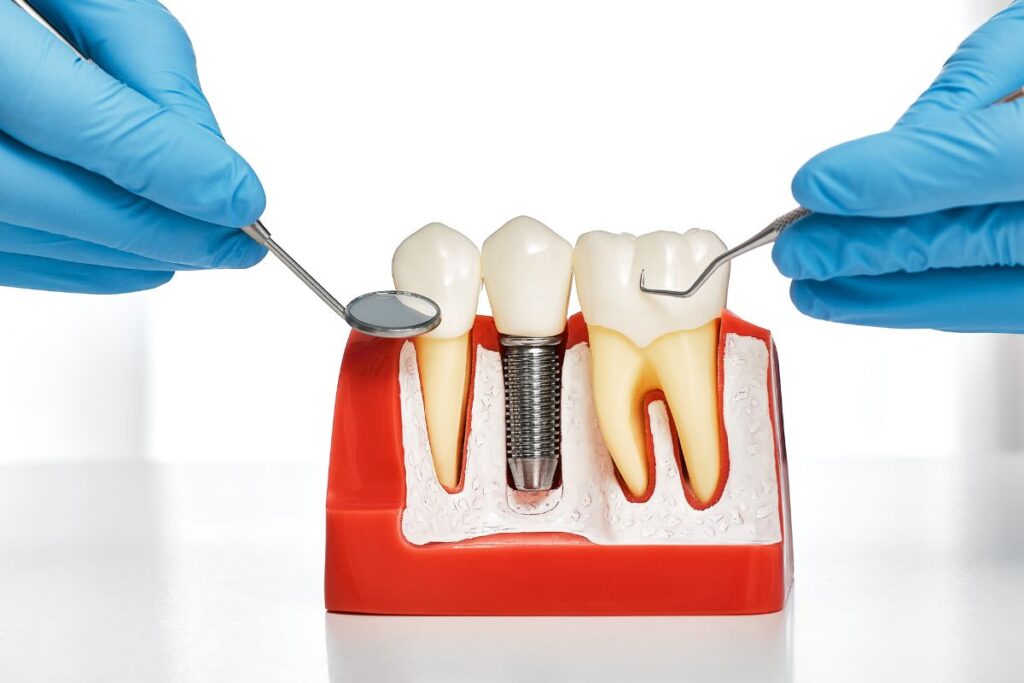
Are you missing a tooth? Have you been told that a dental implant is the best solution, but the thought of placing metal into your body makes you hesitate? You’re not alone! In a world where we increasingly scrutinise what we put into and onto our bodies, it’s only natural to seek the healthiest, most biologically compatible options for our oral health.
If you’re pursuing a holistic or biological approach to wellness, the conversation around dental implants often shifts from the traditional gold standard—titanium—to a modern, metal-free alternative: zirconia. But what makes this ceramic material so special, and why is it quickly becoming the preferred choice for health-conscious patients and practitioners across the United States?
Let's dive into the data and see why Zirconia implants redefine the meaning of a healthy, permanent smile.
The cornerstone of a dentist in Phoenix is the understanding that oral health is inextricably linked to overall systemic health. Introducing a foreign material into the jawbone requires it to be highly biocompatible, meaning it must integrate with the body without causing adverse reactions.
Osseointegration—the implant fusing with the jawbone—is the key to long-term success. Modern ceramic formulations and surface treatments have largely mitigated early concerns about Zirconia's integration ability.
In the U.S. dental implant market, which was valued at $1.5 billion in 2023, demand for aesthetically pleasing results is a major driving factor, especially in North America, which held a 38% market share of the global Zirconia-based dental materials market in 2024.
While titanium remains the traditional, well-documented choice in dentistry (accounting for 91% of the U.S. dental implant market in 2023), the ceramic Zirconia implant is the fastest-growing segment in the market, driven by the increasing demand for holistic, metal-free, and aesthetically superior options.
Zirconia is the choice for patients who prioritize systemic health, minimise immune response, and achieve a truly natural-looking restoration. It offers a powerful blend of high biocompatibility, excellent soft-tissue integration, and superior aesthetics, perfectly aligning with the core principles of holistic dentistry.
Q1: Are Zirconia implants as strong as Titanium implants?
A: Modern Zirconia (specifically yttria-stabilised tetragonal zirconia polycrystal or Y-TZP) is exceptionally strong and has high flexural strength. While Titanium is generally considered superior fracture toughness, advancements in Zirconia formulation have significantly boosted its durability, making it suitable for both anterior and posterior load-bearing applications.
Q2: Are Zirconia implants safe for patients with autoimmune diseases?
A: Zirconia is the preferred choice for patients with compromised immune systems, autoimmune conditions, or metal sensitivities because it is ceramic, metal-free, and chemically inert. Its high biocompatibility and low potential for ion release minimise the risk of triggering adverse immune or inflammatory responses, a key concern in holistic treatment planning.
Q3: Is the procedure for Zirconia implants different?
A: Zirconia implants are often available as a one-piece design (though two-piece options now exist), which can simplify the surgical procedure and eliminate the micro-gap between the implant and the abutment. In this space, bacteria can proliferate in two-piece systems. Some holistic practitioners also pair Zirconia implant placement with advanced techniques like Platelet-Rich Fibrin (PRF) and Ozone therapy to support natural healing.
Q4: How long do Zirconia implants last?
A: While Titanium has a more extended history of clinical data (with survival rates often reported above 90% at 10 years), current research shows Zirconia implants have very promising long-term results. Many systematic reviews demonstrate comparable survival and success rates to Titanium over short-to-mid-term follow-ups. With proper care, they are designed to be a permanent tooth replacement solution.


Copyright © 2026 Whole Health Dentistry • Desert Ridge Medical Plaza 20950 North Tatum Blvd, Suite 300 Phoenix, AZ 85050 • Phone: 480.563.4141