
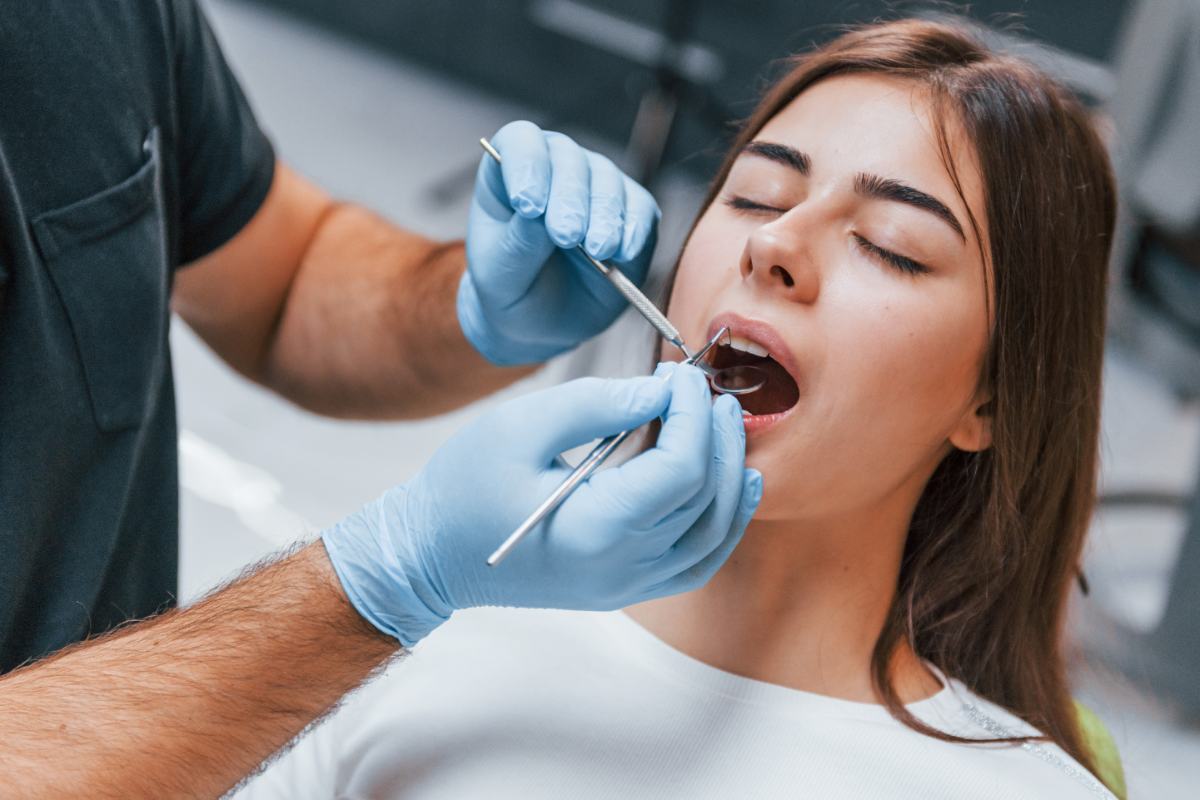
Did an old silver filling suddenly crack, chip, or fall apart while you were eating? Maybe you noticed a sharp edge against your tongue, new sensitivity, or discomfort when biting. If you are in Phoenix, you may wonder whether a broken amalgam filling is simply an inconvenience—or whether it can let bacteria reach deeper into the tooth and cause an infection.
The answer depends on what happened to the filling and the tooth underneath it. A damaged filling does not automatically mean that an infection has developed. However, a broken or leaking restoration can leave the tooth vulnerable to further decay, bacterial entry, cracks, and inflammation if it is not evaluated.
This is especially important when an older amalgam restoration has been in place for many years. Dental amalgam is a durable restorative material, but fillings can eventually wear, fracture, or become compromised. The American Dental Association notes that restoration longevity depends on multiple factors, including the material, the tooth, oral conditions, and the circumstances in which the restoration was placed.
At Whole Health Dentistry in Phoenix, Dr. Eniko Loud can evaluate a damaged filling and the surrounding tooth to determine whether the restoration can be repaired, should be replaced, or needs additional treatment.
Can a Broken Amalgam Filling Cause an Infection?
A broken amalgam filling can increase the risk of problems that may eventually contribute to infection, but the broken filling itself does not automatically mean the tooth is infected.
When a filling fractures or becomes loose, gaps or exposed tooth structure may let bacteria and food particles reach hard-to-clean areas. If decay develops underneath or around the restoration, it can progress deeper into the tooth.
If bacteria eventually reach the pulp—the living tissue containing nerves and blood vessels— inflammation or infection may occur.
The CDC explains that untreated tooth decay can progress to an abscess, a severe infection that can spread beyond the tooth and, in rare cases, cause serious complications.
That is why a broken filling deserves professional evaluation, even if the tooth doesn’t hurt.
What Happens When an Old Filling Breaks?
A broken filling can affect the tooth in several ways.
First, the restoration may no longer fully protect the tooth. Second, the tooth may weaken over time. Third, the broken filling can leave an uneven surface that traps plaque or food.
You may notice:
- A piece of filling has fallen out
- A sharp edge on the tooth
- Food getting trapped around the filling
- New sensitivity to hot or cold
- Pain when chewing
- Intermittent toothache
- A feeling that your bite has changed
- A visible crack or hole
Sometimes there are no obvious symptoms.
That does not necessarily mean the tooth is healthy. A dental exam can identify problems you can’t see or feel at home.
How Common Is Untreated Tooth Decay?
The connection between damaged restorations and decay matters because tooth decay remains extremely common in the United States.
According to the CDC’s 2024 Oral Health Surveillance Report, approximately 20.5% of dentate adults ages 20 to 64 had at least one permanent tooth with untreated decay during the 2017–March 2020 survey period.
The CDC also reports that approximately 21% of U.S. adults ages 20 to 64 have at least one untreated cavity.
These statistics help explain why protecting a tooth after a restoration becomes damaged is important. Don’t ignore a broken filling just because the original cavity was treated years ago.
Can Bacteria Get Under a Broken Filling?
Bacteria can access areas around a compromised restoration.
Your mouth naturally contains many types of bacteria. Dental plaque forms when bacteria accumulate on tooth surfaces. If a filling has fractured, shifted, or developed a significant defect, plaque and food may be more difficult to remove from the affected area.
Whether this leads to recurrent decay depends on several factors, including the defect’s size and location, oral hygiene, diet, saliva, the tooth’s condition, and how quickly you address the problem.
A dentist may use visual examination, dental instruments, X-rays, or other diagnostic methods to determine whether decay is present beneath or around an existing restoration.
What Are Signs That a Broken Filling May Be Infected?
A broken filling requires prompt evaluation if you develop symptoms suggesting deeper tooth involvement.
Watch for:
- Persistent or worsening tooth pain
- Throbbing discomfort
- Pain when biting
- Prolonged sensitivity to hot or cold
- Swollen gums
- Facial swelling
- A pimple or bump on the gums
- Pus or drainage
- A persistent bad taste
- Fever
- Difficulty opening your mouth
A tooth infection can develop without dramatic symptoms, especially if the nerve inside the tooth becomes damaged or dies.
For that reason, the absence of pain does not always prove that an injured tooth is healthy.
Does Every Broken Filling Need to Be Replaced?
Not necessarily.
The appropriate treatment depends on the condition of both the filling and the tooth.
A dentist may determine that the restoration needs replacement if it is fractured, leaking, worn, or associated with recurrent decay. In other situations, a different restorative approach may be more appropriate.
Treatment options can include:
- Repairing a restoration in selected situations
- Replacing the filling
- Using a tooth-colored composite restoration
- Placing an inlay or onlay
- Restoring the tooth with a crown
- Root canal treatment when the pulp is infected or irreversibly inflamed
- Extraction when the tooth cannot be predictably restored
Base the treatment decision on the individual tooth, not simply the age or color of the filling.
Does a Broken Amalgam Filling Mean You Have Mercury Poisoning?
No.
A broken amalgam filling should not automatically be interpreted as evidence of mercury poisoning.
The FDA states that dental amalgam can release small amounts of mercury vapor. Still, available studies have not demonstrated conclusive evidence that dental amalgam causes harmful health effects in the general population.
The FDA does identify certain groups—including pregnant women, nursing mothers, young children, people with certain neurological or kidney conditions, and people with known sensitivity to amalgam components—as potentially more susceptible to mercury exposure.
If you have concerns about an existing amalgam restoration, discuss your medical history and dental options with your dentist rather than attempting to remove or replace the filling yourself.
Should a Healthy Amalgam Filling Be Removed?
Not simply because it is old or contains mercury.
The FDA specifically states that if an amalgam filling is in good condition and there is no decay underneath it, removal is not recommended solely to prevent disease or health conditions. Removing an intact restoration can unnecessarily remove healthy tooth structure and temporarily increase exposure to mercury vapor during the procedure.
That is different from a filling that is fractured, defective, or associated with recurrent decay.
When a restoration has a legitimate dental reason for replacement, your dentist can discuss the available restorative materials and the advantages and limitations of each option.
Can a Tooth-Colored Filling Replace Broken Amalgam?
In some cases, a tooth-colored composite restoration may be an option.
Composite resin is designed to blend with natural tooth structure, making it a popular choice when appearance is important. The FDA notes that resin-based materials do not contain heavy metals, although they have their own considerations, including sensitivity to certain components and differences in longevity.
Whether a composite is appropriate depends on the restoration’s size and location, remaining tooth structure, moisture control, chewing forces, and other clinical factors.
A larger or heavily weakened tooth may require a different type of restoration.
When Might a Crown Be Necessary?
If a filling breaks and the remaining tooth structure is significantly weakened, a crown may provide more comprehensive protection than another filling.
A crown covers the visible portion of the tooth and can help restore its shape and function.
However, a crown is not automatically required whenever an amalgam filling breaks.
Your dentist will evaluate how much healthy tooth remains and whether a filling or another conservative option can restore the tooth adequately.
The goal is generally to preserve healthy tooth structure whenever clinically appropriate.
What If the Broken Filling Has Caused a Tooth Infection?
If bacteria have reached the pulp and caused significant inflammation or infection, replacing the filling alone may not resolve the problem.
In such cases, root canal treatment may be considered to remove diseased pulp tissue, clean the internal canal system, and seal the tooth.
If the tooth is severely fractured or lacks enough healthy structure to support a restoration, extraction may be necessary instead.
The earlier your dentist evaluates a damaged restoration, the more information they have when deciding whether to preserve the natural tooth.
What Should You Do Immediately After an Amalgam Filling Breaks?
If a piece of your filling falls out, avoid chewing hard foods on that side until your dentist evaluates the tooth.
You can gently brush and floss the area to keep it clean. Avoid putting household materials or temporary substances into the tooth unless a dental professional specifically directs you to.
If the tooth has a sharp edge, be careful around your cheek and tongue.
Most importantly, contact your dentist for an evaluation.
If you develop facial swelling, fever, difficulty swallowing, or difficulty breathing, seek urgent medical attention. A spreading dental infection can become a serious medical problem.
Why Should You Avoid Ignoring a Broken Filling?
A damaged filling may not hurt immediately, but waiting can turn a manageable dental problem into something more complicated.
The CDC reports that untreated cavities can cause pain and infections and may progress to an abscess that can spread to other areas of the body.
A broken filling also allows your dentist to evaluate whether decay exists underneath the restoration or whether the surrounding tooth has developed a crack.
Early evaluation doesn’t guarantee a tooth can be saved, but it gives you an chance to identify the problem before it progresses.
A Biological Dentistry Perspective on Broken Fillings
A Phoenix biological dentistry approach may consider more than simply replacing a filling.
At Whole Health Dentistry, a comprehensive dental evaluation can consider the tooth’s condition, gums, existing restorations, bite, oral hygiene, and the patient’s broader health history.
If you are concerned about amalgam, you can discuss questions about restorative materials and whether replacement is clinically appropriate.
However, it’s important to distinguish evidence-based dental concerns from claims not supported by scientific research. The FDA currently does not recommend removing intact amalgam fillings simply because they contain mercury.
A personalized conversation with your dentist can help you understand the condition of your restoration and the available treatment options.
How Can Whole Health Dentistry Help in Phoenix?
If an old amalgam filling has cracked, fallen out, or started causing sensitivity, an examination can help determine what is happening beneath the surface.
At Whole Health Dentistry in Phoenix, Dr. Eniko Loud can evaluate the affected tooth, surrounding tissues, and existing restoration and discuss appropriate treatment options.
The practice can also discuss concerns about dental materials and help you understand whether a restoration should be repaired, replaced, or treated differently.
Conclusion
Can a broken amalgam filling lead to infection? It can contribute to conditions that increase the risk of recurrent decay or bacterial involvement, but a broken filling does not automatically mean the tooth is infected.
The important issue is what has happened to the tooth underneath and around the restoration.
A damaged filling may allow bacteria and food to accumulate around exposed tooth structure. If decay progresses toward the pulp, inflammation or infection can develop. The CDC reports that approximately 21% of U.S. adults ages 20 to 64 have at least one untreated cavity, demonstrating how common untreated tooth decay remains.
At the same time, you shouldn’t automatically remove an old amalgam filling just because it contains mercury. The FDA recommends leaving intact amalgam restorations in place when they are functioning properly and there is no decay underneath, unless removal is medically necessary.
If your filling has fractured, become loose, or developed a sharp edge, professional evaluation is the safest way to determine what is happening.
At Whole Health Dentistry, Dr. Eniko Loud can examine your tooth and discuss treatment options based on your individual dental needs and health history.
Visit our dental practice in Phoenix. Book now to schedule your appointment with our team.
Frequently Asked Questions
1. What dental services does Whole Health Dentistry provide?
Our dental practice provides a range of dental services designed to support preventive, restorative, cosmetic, and whole-health dental needs. Dr. Eniko Loud can recommend treatment based on your individual oral health.
2. How can I schedule a dental appointment?
Contact our Phoenix dental practice to schedule an appointment. Our team can help you find a convenient time and answer questions about your dental visit.
3. What should I expect during my first dental appointment?
Your first visit may include a review of your dental and medical history, an oral examination, diagnostic imaging when appropriate, and a discussion of your concerns and available treatment options.
4. Can Dr. Eniko Loud create a personalized treatment plan?
Yes. Dental treatment should be based on the condition of your teeth and gums, your existing restorations, health history, concerns, and treatment goals. Dr. Eniko Loud can discuss appropriate options after evaluating your needs.
5. When should I contact the dental practice about a broken filling?
Contact our practice if a filling cracks, falls out, becomes loose, or is associated with pain, sensitivity, swelling, or discomfort when chewing. Prompt evaluation can help determine whether the tooth needs repair, replacement, or additional treatment.