
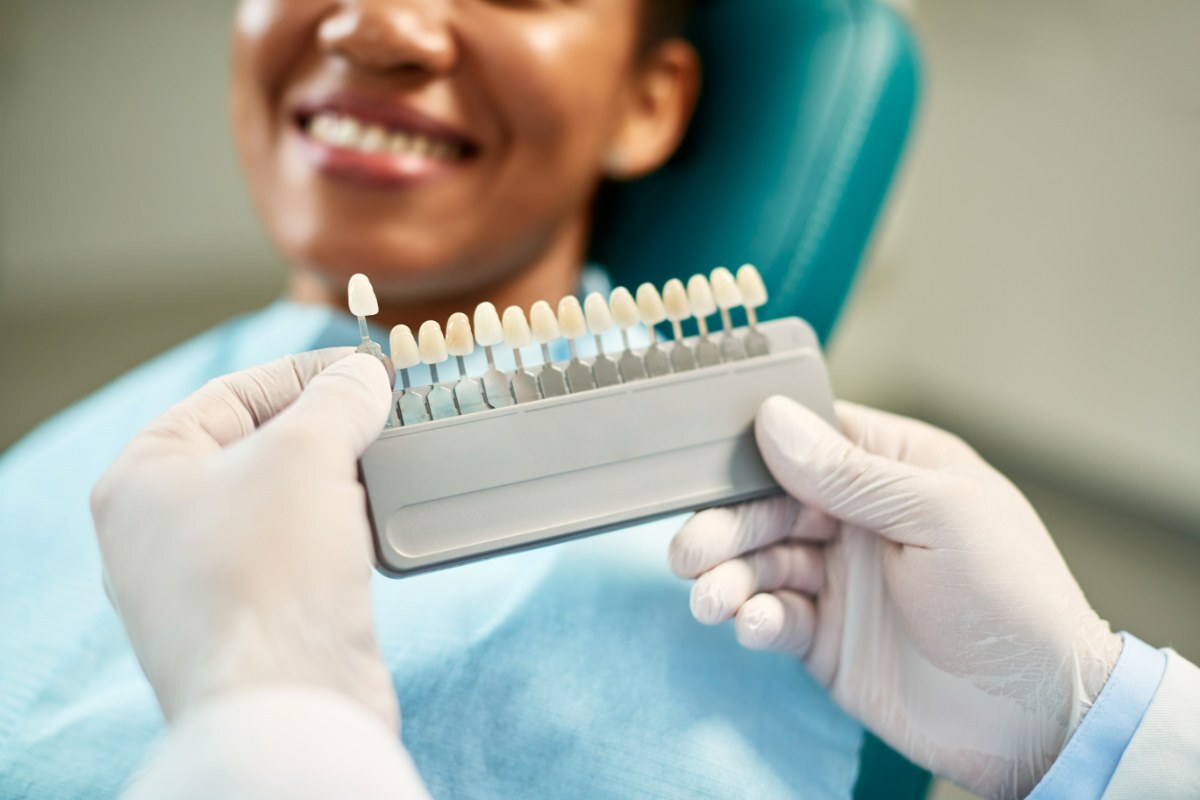
Do you find yourself hiding your smile because of small gaps between your teeth? You’re not alone. Many adults are self-conscious about spaces between their front teeth, even when their teeth are otherwise healthy. While braces and clear aligners remain popular orthodontic solutions, they’re not the only option. If you’re looking for a faster cosmetic improvement, Lumineers® may be worth considering.
Lumineers are ultra-thin porcelain shells designed to enhance the appearance of teeth with minimal preparation. In many cases, they can successfully close small to moderate gaps while creating a more balanced, natural-looking smile. However, they aren’t the right solution for every patient, and understanding their benefits and limitations is essential before starting treatment.
According to the American Academy of Cosmetic Dentistry (AACD), cosmetic dentistry continues to grow in popularity as patients seek minimally invasive ways to improve their smiles. In addition, AACD surveys have found that many adults believe an attractive smile positively influences confidence, social interactions, and professional success.
This guide explains how Lumineers work, when they can effectively close gaps between teeth, who is a good candidate, and what alternatives may be recommended for more complex spacing issues.
Can Lumineers Really Close Gaps Between Teeth?
Yes—in many cases.
Lumineers can successfully close small to moderate gaps by slightly increasing the width of one or more teeth.
Rather than moving teeth into new positions, Lumineers reshape the visible surfaces of the teeth to create the appearance of a more evenly spaced smile.
This makes them a cosmetic solution rather than an orthodontic treatment.
What Size Gaps Can Lumineers Fix?
The answer depends on several factors.
Your cosmetic dentist evaluates:
- Gap size
- Tooth proportions
- Bite alignment
- Gum symmetry
- Overall smile design
Generally, Lumineers work best for:
- Small gaps
- Mild spacing between front teeth
- Evenly distributed spaces
- Patients with otherwise healthy bites
Larger gaps or significant bite problems may require orthodontic treatment instead.
Who Is a Good Candidate?
Ideal candidates typically have:
- Healthy teeth
- Healthy gums
- Small cosmetic gaps
- Good oral hygiene
- Sufficient enamel
- Realistic expectations
Patients should also be free of untreated:
- Tooth decay
- Gum disease
- Active infections
Your dentist will address these concerns before beginning cosmetic treatment.
When Lumineers May Not Be the Best Option
Although Lumineers work well for many patients, they are not appropriate for every situation.
They may not be recommended if you have:
Large Gaps
Wide spaces often require orthodontic treatment to align the teeth before considering cosmetic enhancements.
Significant Bite Problems
Patients with:
- Severe overbite
- Underbite
- Crossbite
- Open bite
usually benefit from orthodontic treatment rather than cosmetic restorations alone.
Teeth Grinding (Bruxism)
Excessive grinding places significant pressure on porcelain restorations.
If you grind your teeth, your dentist may recommend wearing a custom nightguard after treatment to protect your Lumineers.
Active Gum Disease
Healthy gums create the foundation for attractive cosmetic results.
Treat any periodontal disease before placing Lumineers.
How Do Lumineers Close Spaces?
Lumineers improve the appearance of spacing by carefully altering the visible dimensions of the teeth.
Your cosmetic dentist designs each restoration to:
- Increase tooth width proportionally
- Maintain natural contours
- Preserve proper contact points
- Blend seamlessly with neighboring teeth
The result is a smile that appears naturally aligned without obvious signs of cosmetic treatment.
Cosmetic Dentistry by the Numbers
Modern cosmetic dentistry has become increasingly popular in the United States.
Here are a few important facts:
- The American Academy of Cosmetic Dentistry (AACD) reports that improving smile appearance remains one of the primary reasons patients seek cosmetic dental treatment.
- According to the National Institute of Dental and Craniofacial Research (NIDCR), most adults experience dental conditions that may benefit from restorative or cosmetic treatment during their lifetime.
- Research published in the Journal of Esthetic and Restorative Dentistry shows that conservative porcelain restorations can provide long-lasting esthetic improvements when planned and maintained appropriately.
- Clinical studies report porcelain veneer survival rates exceeding 90% after 10 years in many patients who maintain good oral hygiene and regular dental care.
Benefits of Choosing Lumineers
Many patients appreciate Lumineers for several advantages.
Conservative Treatment
Since minimal enamel removal is often required, more natural tooth structure is preserved compared with traditional veneers.
Natural Appearance
Modern porcelain closely mimics natural enamel by reflecting light similarly to healthy teeth.
Stain Resistance
Porcelain resists staining from:
- Coffee
- Tea
- Red wine
- Tobacco
Better than natural enamel and many composite materials.
Long-Lasting Results
With proper care, porcelain restorations can remain attractive and functional for many years.
Routine dental visits and excellent oral hygiene significantly contribute to their longevity.
Improved Smile Confidence
Closing visible gaps often enhances facial harmony and boosts self-confidence in both social and professional settings.
What Is the Lumineers Treatment Process?
Getting Lumineers typically requires two to three dental visits, depending on your individual treatment plan.
Step 1: Cosmetic Consultation
Your first appointment focuses on evaluating your smile and determining whether Lumineers are the right solution.
Your cosmetic dentist will assess:
- The size of the gaps between your teeth
- Tooth shape and proportions
- Bite alignment
- Gum health
- Existing dental restorations
- Overall oral health
Digital photographs, X-rays, and digital smile design technology may also help you visualize your expected results.
If gum disease or tooth decay is present, we should treat those issues before starting cosmetic treatment.
Step 2: Smile Design
We create a personalized treatment plan based on your facial features and smile goals.
Your dentist carefully considers:
- Tooth width
- Tooth length
- Tooth symmetry
- Smile line
- Lip position
- Gum contours
The goal isn’t simply to close spaces, but to create teeth that look naturally balanced and proportioned.
Step 3: Impression or Digital Scan
Next, your dentist records highly accurate impressions or digital scans of your teeth.
A dental laboratory uses these records to fabricate custom Lumineers that match your:
- Tooth color
- Shape
- Bite
- Smile design
Each restoration is customized specifically for your smile.
Step 4: Placement
Once your Lumineers are ready, your dentist checks:
- Fit
- Color
- Shape
- Bite
- Overall appearance
After any necessary adjustments, the Lumineers are permanently bonded to your teeth using a strong dental adhesive.
The result is an immediate cosmetic improvement with little or no downtime.
Lumineers vs. Traditional Veneers
Although both treatments improve smile aesthetics, they differ in several important ways.
| Feature | Lumineers | Traditional Veneers |
| Tooth Preparation | Minimal or none | Usually requires enamel removal |
| Thickness | Ultra-thin | Slightly thicker |
| Reversibility | Often more conservative | Usually irreversible due to enamel removal |
| Appearance | Very natural | Highly natural |
| Durability | Excellent | Excellent |
| Best For | Mild cosmetic concerns | Broader cosmetic corrections |
Your cosmetic dentist will recommend the option that best matches your oral health, tooth anatomy, and desired outcome.
Lumineers vs. Composite Bonding
Composite bonding is another popular treatment for closing small spaces between teeth.
Composite Bonding
Advantages:
- Lower initial cost
- Usually completed in one visit
- Easy to repair
- Minimally invasive
Limitations:
- More susceptible to staining
- May chip more easily
- Generally shorter lifespan than porcelain
Lumineers
Advantages:
- Superior stain resistance
- Excellent durability
- Natural translucency
- Long-lasting esthetics
- Highly polished surface
For patients seeking long-term cosmetic improvements, porcelain Lumineers often provide greater longevity.
Lumineers vs. Invisalign®
Many patients wonder whether Lumineers or Invisalign is the better option.
The answer depends on the cause of the spacing.
Invisalign
Best for:
- Moving teeth
- Correcting bite problems
- Closing larger spaces
- Improving overall alignment
Treatment usually takes several months to over a year, depending on case complexity.
Lumineers
Best for:
- Small cosmetic gaps
- Improving tooth shape
- Correcting discoloration
- Enhancing smile appearance quickly
Unlike Invisalign, Lumineers do not physically move teeth.
Are Lumineers Permanent?
Lumineers are designed to be long-lasting restorations.
Clinical studies evaluating porcelain veneers have reported survival rates greater than 90% after 10 years, with many lasting considerably longer when patients maintain excellent oral hygiene and regular dental care.
Longevity depends on several factors, including:
- Daily brushing and flossing
- Avoiding excessive bite forces
- Wearing a nightguard if you grind your teeth
- Routine dental checkups
- Overall oral health
Possible Limitations
Although Lumineers offer many benefits, they also have limitations.
They may not completely correct:
- Severe tooth misalignment
- Large gaps
- Significant bite problems
- Advanced tooth wear
- Active gum disease
Choosing treatment based solely on appearance without addressing underlying orthodontic or periodontal concerns may compromise long-term results.
A comprehensive examination helps determine the most appropriate solution.
Caring for Your Lumineers
Proper maintenance helps preserve both appearance and function.
Your dentist may recommend:
- Brushing twice daily with fluoride toothpaste
- Flossing every day
- Using a non-abrasive toothpaste
- Limiting habits such as chewing ice or hard candy
- Wearing a custom nightguard if you grind your teeth
- Scheduling professional cleanings every six months
With consistent care, your restorations can remain attractive for many years.
Can Lumineers Improve More Than Tooth Gaps?
Yes.
Many patients choose Lumineers because they address several cosmetic concerns at once.
They may improve:
- Mild discoloration
- Small chips
- Slightly uneven teeth
- Worn edges
- Minor shape irregularities
- Small spaces between teeth
This comprehensive cosmetic improvement often eliminates the need for multiple separate treatments.
Common Myths About Lumineers
Myth 1: Lumineers Can Replace Orthodontics
Fact: Lumineers improve the appearance of tooth spacing but do not reposition teeth or correct significant bite problems.
Myth 2: Lumineers Damage Healthy Teeth
Fact: Not necessarily.
One of the primary advantages of Lumineers is that they often require little or no enamel removal, making them a conservative cosmetic option for appropriately selected patients.
Myth 3: Lumineers Look Fake
Fact: Modern porcelain closely resembles natural enamel in both color and light reflection.
When designed by an experienced cosmetic dentist, Lumineers can provide highly natural-looking results that complement your facial features and smile.
Why Choosing an Experienced Cosmetic Dentist Matters
Successful cosmetic dentistry requires both technical skill and artistic planning.
An experienced cosmetic dentist carefully evaluates:
- Facial symmetry
- Tooth proportions
- Gum contours
- Bite function
- Smile aesthetics
This individualized approach helps ensure that your Lumineers not only close unwanted gaps but also create a balanced, healthy-looking smile that appears completely natural.
Conclusion
Lumineers may be a suitable option for patients who want to reduce the appearance of small or moderate spaces between teeth without undergoing traditional orthodontic treatment. These thin porcelain restorations are bonded to the front surfaces of teeth to alter their shape and proportions rather than physically moving the teeth. However, the right treatment depends on the gap size, tooth condition, bite, gum health, and overall dental needs. Larger spaces or underlying oral health concerns may require orthodontic or periodontal care instead.
At Whole Health Dentistry, Dr. Eniko Loud can evaluate your teeth and discuss whether Lumineers, conventional veneers, bonding, clear aligners, or another approach is appropriate. A personalized assessment can help identify the option that best fits your dental condition and treatment goals.
Visit our dental practice for a cosmetic dental consultation and learn more about available options for improving the appearance of gaps between teeth. Schedule an appointment to discuss your concerns and create a treatment plan designed around your needs.
Frequently Asked Questions
1. Can Lumineers close a small gap between my teeth?
Yes. Lumineers can make small or moderate spaces less noticeable by adding a thin layer of porcelain to the visible surfaces of the teeth. They do not move the teeth into new positions.
2. How does our dentist determine if Lumineers are right for a tooth gap?
Our dentist will evaluate the size and location of the gap, tooth structure, bite, gums, and overall oral health. This examination helps determine whether Lumineers or another treatment would provide a better result.
3. Will I need orthodontic treatment instead of Lumineers?
Not always. Small cosmetic gaps may be addressed with Lumineers or bonding, while larger spaces, bite concerns, or significant tooth-position problems may be better suited to braces or clear aligners.
4. How should I care for Lumineers after treatment?
Maintain normal oral hygiene by brushing twice daily, flossing every day, and attending regular dental examinations and cleanings. Avoid biting hard objects that could damage the restoration.
5. What other cosmetic concerns can Lumineers address?
Depending on your dental condition, Lumineers may improve the appearance of certain discoloration, minor chips, uneven edges, small spaces, or irregular tooth shapes. Our dentist can explain whether they are appropriate for your specific concerns.