
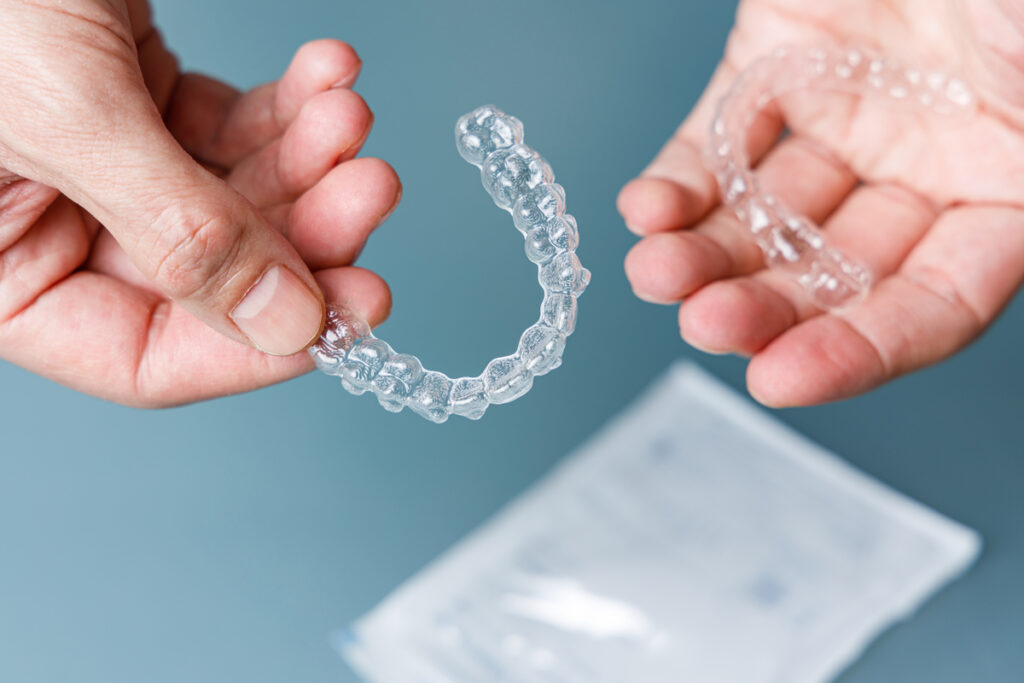
Have you ever caught yourself practicing-smiling in the mirror, wondering if it’s "too late" to fix that one crooked tooth? Or maybe you’re a parent watching your teenager dodge the camera because they’re self-conscious about their smile, but the thought of "metal mouth" makes them cringe even harder.
Whether you’re navigating the high-stakes world of high school social circles or the professional demands of a corporate boardroom, the quest for a perfect smile shouldn't feel like a compromise. Enter Invisalign—the clear aligner system that has officially revolutionized orthodontics. But is there a difference between the "Teen" version and the "Adult" one? And more importantly, how do they actually fit into your daily coffee runs, soccer practices, or client presentations?
Let's dive into the data, the lifestyle perks, and the clinical differences to see which path to a straighter smile is right for you.
Orthodontics isn't just for middle schoolers anymore. In fact, according to the American Association of Orthodontists (AAO), one in three orthodontic patients today is an adult. The global clear aligner market, valued at approximately $4.22 billion in 2025, is projected to soar to over $13 billion by 2034 as more Americans opt for discreet treatments over traditional wires and brackets.
While the end goal—a healthy, beautiful smile—is the same, the journey for a 15-year-old and a 45-year-old looks surprisingly different.
For many teenagers, the "braces era" is a rite of passage they’d rather skip. Studies show that roughly 41% of teens consider traditional metal braces embarrassing. Invisalign Teen addresses this social anxiety while incorporating specific "smart" features that account for a developing mouth.
Invisalign for Teens isn’t just scaled-down adult treatment — it’s customized for a growing mouth:
These design tweaks aren’t just gimmicks — they matter in real life. Since teens can be forgetful, these features help ensure compliance and maintain treatment progress with Invisalign in Phoenix.
According to surveys, teens who use Invisalign report a twice as large boost in self-confidence compared to those with traditional braces. That’s huge when you’re navigating school photos, Zoom calls, and classroom presentations.
Plus, teens with Invisalign tend to adapt faster and feel more confident than those with bracket-based braces. In one quality-of-life study, teens reported greater comfort and better perception, and fewer disruptions with aligners vs. fixed appliances.
For adults, the motivation is often a mix of health and aesthetics. Whether you had braces as a kid and forgot to wear your retainer (we’ve all been there) or you’re finally investing in yourself, the adult experience is tailored for a fully developed jaw.
Adults face a different set of priorities. You might be thinking about:
With Invisalign, discretion is one of the biggest draws.
Adults often choose Invisalign because it fits into a full schedule without making you feel self-conscious. The aligners are virtually invisible and can be removed for:
And there’s science behind the comfort factor: Invisalign is generally less painful than traditional braces, with smoother plastic and fewer irritations.
Plus, adults are typically more compliant with wearing aligners consistently — and that matters because compliance directly relates to treatment success and timing.
Another key difference is retainers: many adults may need lifelong nighttime retainer wear after treatment to prevent teeth from shifting back — a consideration for adults focused on long-term stability.
When evaluating Invisalign, your daily routine plays a major role. Let’s look at how each group typically interacts with treatment:
Invisalign works well if teens are responsible about consistent wear — but if compliance is spotty, treatment time can drag out. According to clinical data, about 1 in 6 patients switches from Invisalign to braces mid-treatment — often due to compliance challenges.
Adults often have strong motivation, which boosts compliance and smooths progress. But life can still get in the way: eating out, professional travel, or long workdays sometimes mean removing aligners more than expected, reducing total wear time, and potentially extending treatment.
Both teens and adults typically see transformative outcomes in a matter of months — but results still depend heavily on how faithfully you wear the aligners. Missing a few hours each day can add weeks or even months to the timeline.
Here’s a practical guide to help you decide:
Great choice: Invisalign Teen.
Great choice: Invisalign for Adults.
Whether you’re a teen navigating the halls of high school or an adult navigating a career, Invisalign offers a flexible, discreet, and highly effective way to achieve the smile you've always wanted. Teens benefit from features designed for growth and "real-life" accidents, while adults enjoy a treatment that fits seamlessly into a busy, professional schedule.
The "best" treatment isn't about age—it's about compliance. As long as you (or your teen) can commit to wearing the aligners for 22 hours a day, the results are nearly guaranteed.
If you’re considering Invisalign treatment, talk openly with a trusted dentist in Phoenix. They can help determine the right procedures to restore your smile while safeguarding your long-term oral health.
1. Is Invisalign as effective for teens as it is for adults?
Yes — Invisalign works well for both age groups when worn 20–22 hours per day. Features like compliance indicators help ensure teens stay on track.
2. How long does Invisalign treatment usually take?
Treatment typically lasts 6 to 18 months, depending on complexity. Teens may sometimes finish sooner due to jaw growth.
3. Are clear aligners painful?
Most patients report less pain and irritation compared to metal braces, especially in the early stages.
4. What happens if I lose my aligners?
Invisalign Teen includes several free replacements. Adults can get replacements too, but they’re typically not included.
5. Do I still need retainers after Invisalign?
Yes — retainers help maintain results long-term, and adults, especially, may wear them at night indefinitely.


Copyright © 2026 Whole Health Dentistry • Desert Ridge Medical Plaza 20950 North Tatum Blvd, Suite 300 Phoenix, AZ 85050 • Phone: 480.563.4141