Thought about possibly aligning your teeth? You're not alone. Smiling generously can hence start a day, forgetting all the imperfections for the next twenty-four hours and improve your well-being. But when it comes to choosing the right treatment, you might be stuck between two popular options: According to our young patient, their choice for orthodontic treatment will be whether to use Invisalign or conventional braces.
Fear not, fellow smile-seeker. This blog represents different types of algorithms: reinforcement, deep learning, statistical inference, machine learning, and support vector machines.
The Classic Contender: The old braces, on the other hand, are made of metal wires and brackets which helps achieve movement and positioning of the teeth.
The vision is unmistakable – metal brackets stuck on teeth, interconnected by wires and packed by colorful rubber bands. Conventional wired braces have been the prevailing method to provide that perfect smile for years without any apparent flaws. Here's a quick rundown of their pros and cons:
Pros
- Effective for most cases: The braces as a magic tool are expected to battling a wide range of orthodontic problems such as mild crowding to extreme overbites and underbites.
- Relatively affordable: An orthodontic brace costs less than Invisalign, especially when insurance is to cover it.
- Less user-dependent: You don't have to set a timer or take a task list when wearing or removing them – Braces work without anybody's assistance for 24 hours.
Cons
- Noticeable: Okay, so the truth is, the braces are not iconic for their invisibility factor. Some individuals having trouble with self-expression and self-esteem often escape into these spaces.
- Discomfort: Extremely taut wires can be temporarily sore and can even irritate the threads.
- Dietary restrictions: Adhesive foods or hard ones could possibly scratch the braces or the wires, so you can unfortunately forget all the chewy candy for now.
- Oral hygiene challenges: To remove plaque adhering to braces, one needs to be more efficient when brushing and flossing.
The New-Age Challenger: Invisalign
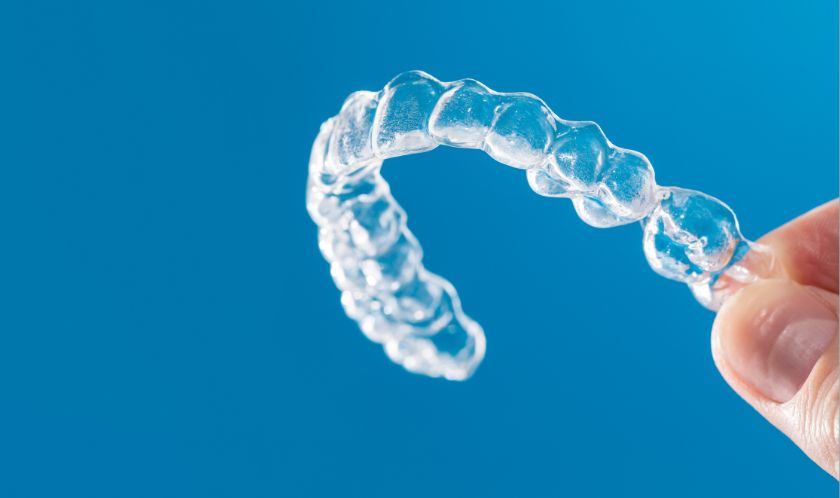
Invisalign now stands as one of the options for teeth clinical treatment thanks to the special high-tech improvement. Instead of metal, it uses a sequence of see-through, changeable retainers that move your teeth by little bits at a time. Here's what makes Invisalign stand out
Pros
- Nearly invisible: In this case the transparent aligners are virtually invisible and therefore good for those who are concerned about the looks that the classic symmetry have.
- More comfortable: The wires and brackets have gone, which mean less discomfort for your gums and cheeks.
- Dietary freedom: There is no need for you to remove anything – the aligners simply stay there when you eat and drink, no limitations needed.
- Easier cleaning: It is quite easy to keep oral hygiene when you just have to remove the aligners to brush and floss your teeth.
Cons
- Not suitable for all cases: Invisalign is not as great an option for the care complex orthodontic as the conventional braces are.
- Requires discipline: So it’s recommended to keep the aligners on for 22 hours a day if you wish to see results. Losing or forgetting this might represent the biggest challenge for passing the right diagnosis.
- Higher cost: Invisible aligner treatment might cost you more as compared with braces and insurance is like a cherry on top.
So, Which One Wins? It depends on the types of goals you set before smile treatment.
The winner is unclear, it is relevant for your needs and taste.Consider these factors:
- Severity of misalignment: If you have a complex problem, removing your case may be a more realistic approach.
- Lifestyle: If you are a fan of the combination of fun and very active lifestyle, then you definitely can find Invisalign very convenient and used to its disappearance.
- Discipline: If you have memory problems or are habitually irregular, braces could be a simple enough option to make.
- Budget: Take a closer look at your financial condition and Policy.
The act of consulting with your dentist is one of a kind experience that can transform your life forever.
At the end of the day, the most appealing way to figure out whether Invisalign or braces will be better for you is to consult a professional and respected orthodontist. They can evaluate your situation and reach a conclusion. They can advise you on the treatment of your irregular teeth and the perfect smile.